
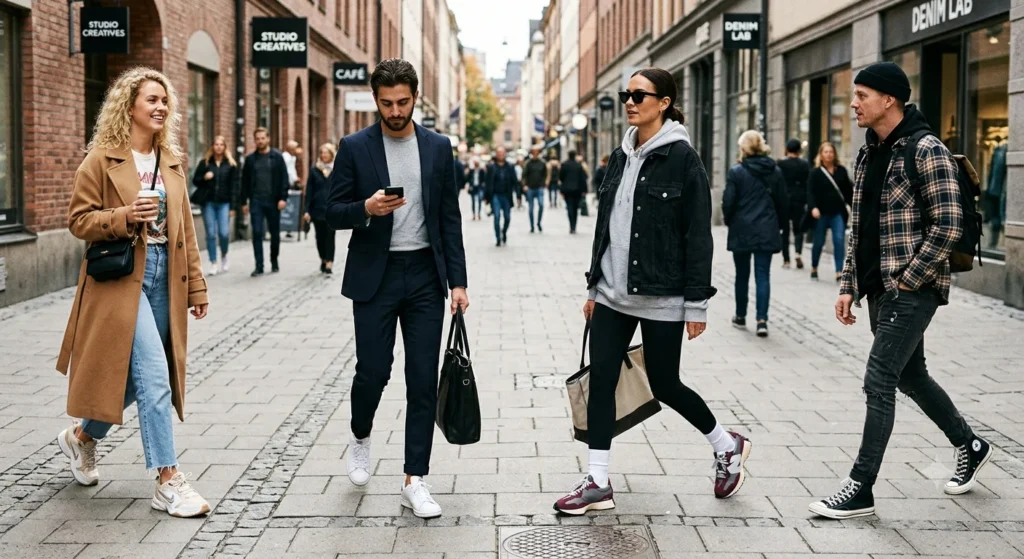
Sneakers have moved far beyond sports. Across American cities, campuses, workplaces, shopping areas, and creative communities, sneakers are central to everyday street fashion. They are worn with jeans, cargo pants, dresses, suits, shorts, skirts, and relaxed workwear.
The strongest sneaker outfits combine comfort with proportion. A shoe may be popular, but it still needs to work with the wearer’s clothing, routine, and preferred style.
Readers interested in current sneaker and streetwear ideas can use trends as inspiration while choosing footwear that remains useful after the excitement fades.
Low-Profile Sneakers Are Returning
Slim sneakers with lower soles are becoming more visible. These styles often have simple shapes, flat bottoms, and understated color combinations.
Low-profile shoes work well with straight jeans, wide trousers, long skirts, casual dresses, and relaxed tailoring.
Their smaller shape can make an outfit feel lighter, especially when clothing has more volume.
Neutral versions in white, black, brown, gray, or navy offer broad flexibility. Colorful designs can create a stronger streetwear statement.
Comfort should still be tested because a thin sole may not provide enough support for every person or activity.
Classic White Sneakers Remain Useful
Clean white sneakers continue to appear across different fashion styles because they are easy to combine.
They can soften formal clothing, brighten dark outfits, and support simple weekend looks.
Leather-style materials may be easier to wipe clean, while canvas can feel lighter during warm weather.
White sneakers require maintenance. Regular cleaning prevents stains from becoming permanent and helps the shoes look intentional.
Slight wear can create character, but heavy dirt may affect the overall outfit.
Streetwear coverage from fashion trend and culture writers often shows how simple footwear remains relevant even when louder trends change.
Retro Running Shoes Are Growing
Retro running designs use layered materials, curved panels, mesh sections, and color combinations inspired by older athletic footwear.
These sneakers often provide more cushioning than low-profile court styles.
They work with relaxed jeans, athletic pants, cargo trousers, shorts, and casual outerwear.
Neutral color combinations offer everyday use, while bright details can become the main focus of an outfit.
Because retro shoes already include visual detail, the remaining clothing can stay simple.
A plain sweatshirt, straight pants, and layered running sneakers can create a balanced street-style look.
Chunky Sneakers Are Becoming More Controlled
Oversized sneakers remain part of American street fashion, but many current designs use cleaner shapes and less extreme proportions.
Chunky soles can balance wide-leg jeans, oversized jackets, and loose cargo pants.
The key is avoiding too much visual weight. An extremely large shoe combined with several bulky clothing layers may overwhelm the outfit.
People with smaller frames can still wear chunky sneakers by choosing a pair with a defined shape and moderate sole.
Comfort varies widely. Heavy footwear may become tiring during long walking days.
Earth Tones Are Expanding
Brown, beige, olive, tan, cream, clay, and muted green are becoming common sneaker colors.
These shades work naturally with denim, workwear, neutral clothing, and seasonal layers.
Earth tones can feel softer than bright white and may hide minor dirt more effectively.
A brown-and-cream sneaker can match blue jeans, olive cargos, tan trousers, or black clothing.
Useful street fashion and footwear guidance can help shoppers see how color combinations affect the flexibility of a sneaker wardrobe.
Bright Sneakers Are Becoming Outfit Anchors
Bold sneakers can make simple clothing more interesting.
Red, blue, green, yellow, and mixed-color shoes may become the central feature of an outfit.
When footwear is bright, neutral clothing often creates balance. Black trousers, a white shirt, and colorful sneakers can feel more organized than several competing colors.
Another method is repeating one shoe color in a small accessory such as a cap, bag, or jacket detail.
Exact color matching is unnecessary. The goal is visual connection rather than perfect coordination.
Sneakers Are Being Worn With Tailoring
Relaxed suits and sneakers are common in creative workplaces, social events, and modern business-casual settings.
The combination works best when the suit has a softer structure and the sneakers are clean.
Simple low-profile shoes often create the most polished result. Retro runners can also work when the tailoring is intentionally relaxed.
Formal events may still require dress shoes, so dress expectations should be checked.
A sneaker-and-suit outfit should look planned. Wrinkled clothing and damaged shoes can make the combination appear careless.
Wide-Leg Pants Are Changing Sneaker Proportions
The growth of wide trousers and relaxed denim has influenced footwear choices.
Larger pants often pair well with shoes that have enough visual presence. Retro runners, moderate platform sneakers, and structured court shoes can create balance.
Pant length matters. Fabric that completely covers the shoe may become damaged or hide important details.
A slight break at the top of the sneaker often creates a clean appearance.
People should test the outfit while walking because pants may move differently than they appear in a mirror.
Clean Styling Is Competing With Logo-Heavy Looks
Some streetwear continues to feature large logos and recognizable brands, while another direction focuses on simple clothing with minimal branding.
Clean sneakers allow fabric, fit, and proportion to receive more attention.
This style may use neutral shoes, plain shirts, relaxed trousers, and one carefully chosen accessory.
Minimal branding can also make clothing easier to combine across several seasons.
Daily sneaker culture and fashion updates can introduce new footwear ideas without requiring shoppers to follow every logo-driven release.
Comfort Technology Matters
Sneaker style should not ignore comfort.
People who walk long distances may need cushioning, arch support, breathable materials, and secure fit.
A fashionable shoe that causes repeated pain is unlikely to provide long-term value.
Try sneakers later in the day when feet may be slightly larger. Wear the type of socks expected during normal use.
Walk on different surfaces when possible and check heel movement, toe space, and pressure areas.
People with specific foot concerns may require professional advice or specialized footwear.
Keep A Small Versatile Rotation
A practical sneaker collection may include three categories.
One clean neutral pair can work with polished casual clothing. One comfortable walking shoe can support active days. One colorful or distinctive pair can add personality.
Additional shoes should provide a clear difference in function or style.
Buying several similar sneakers can create storage problems and reduce regular use.
Review current shoes before purchasing new releases.
Build Style Around Real Life
Street fashion should support everyday movement. Trends can introduce new colors, shapes, and outfit ideas, but comfort and personal identity remain important.
Choose sneakers that match the clothing already owned. Consider walking habits, weather, cleaning needs, and workplace expectations.
The strongest sneaker style does not depend entirely on price, rarity, or brand recognition. It comes from choosing footwear that fits well, supports the day, and completes an outfit naturally.